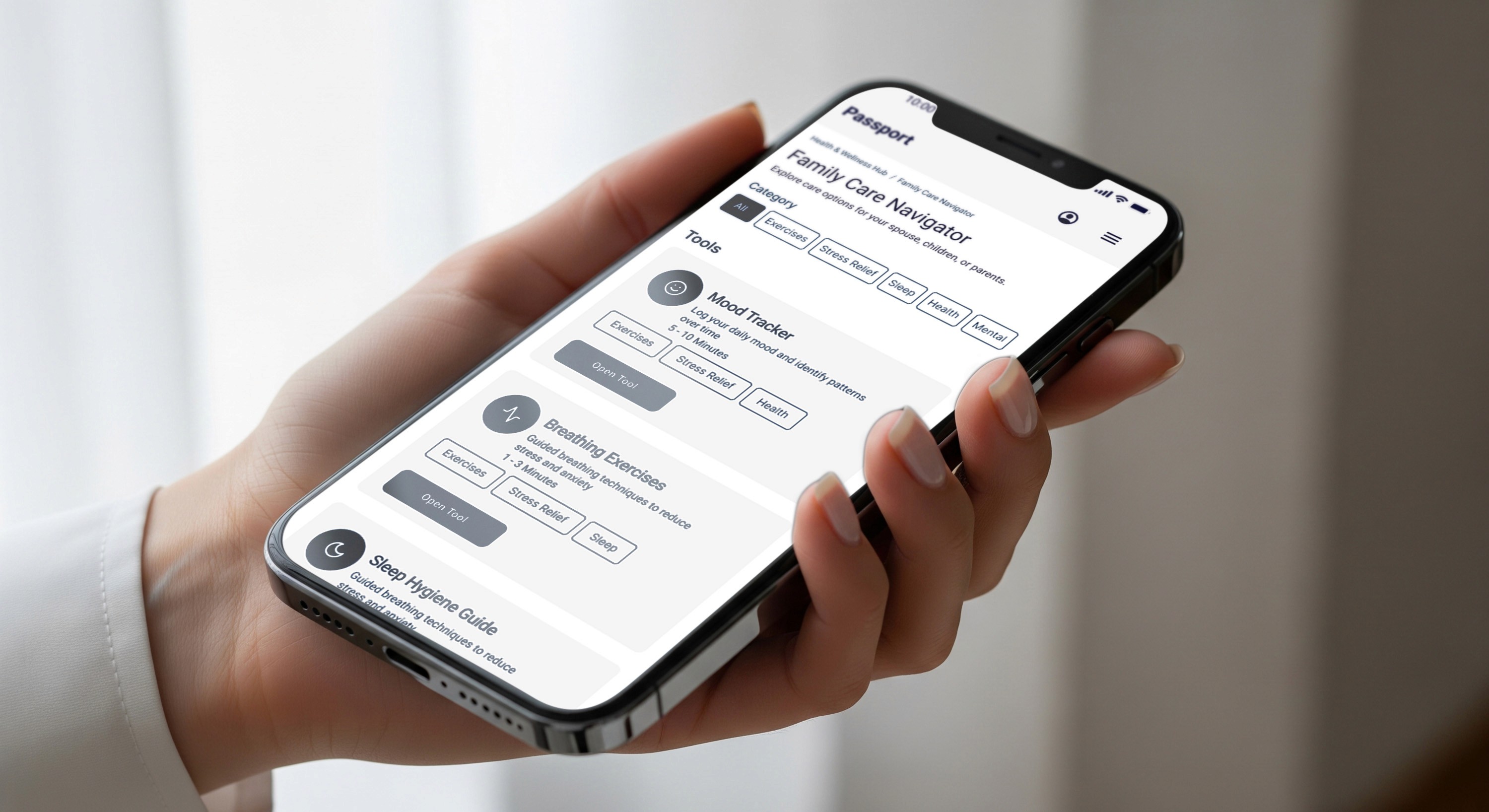
SHIFT
A mobile-first shift marketplace that lets associates swap and pick up shifts on their own, cutting manager time spent on scheduling and boosting self-service adoption.
Role:
UX design for mobile-first self-service shift marketplace
Users Impacted:
250K+ Associates / 1,500 Store Managers
Tools:
Figma / UX research / Usability Testing
Results:
Higher self-service usage / less manager scheduling hours
Overview
User Problem
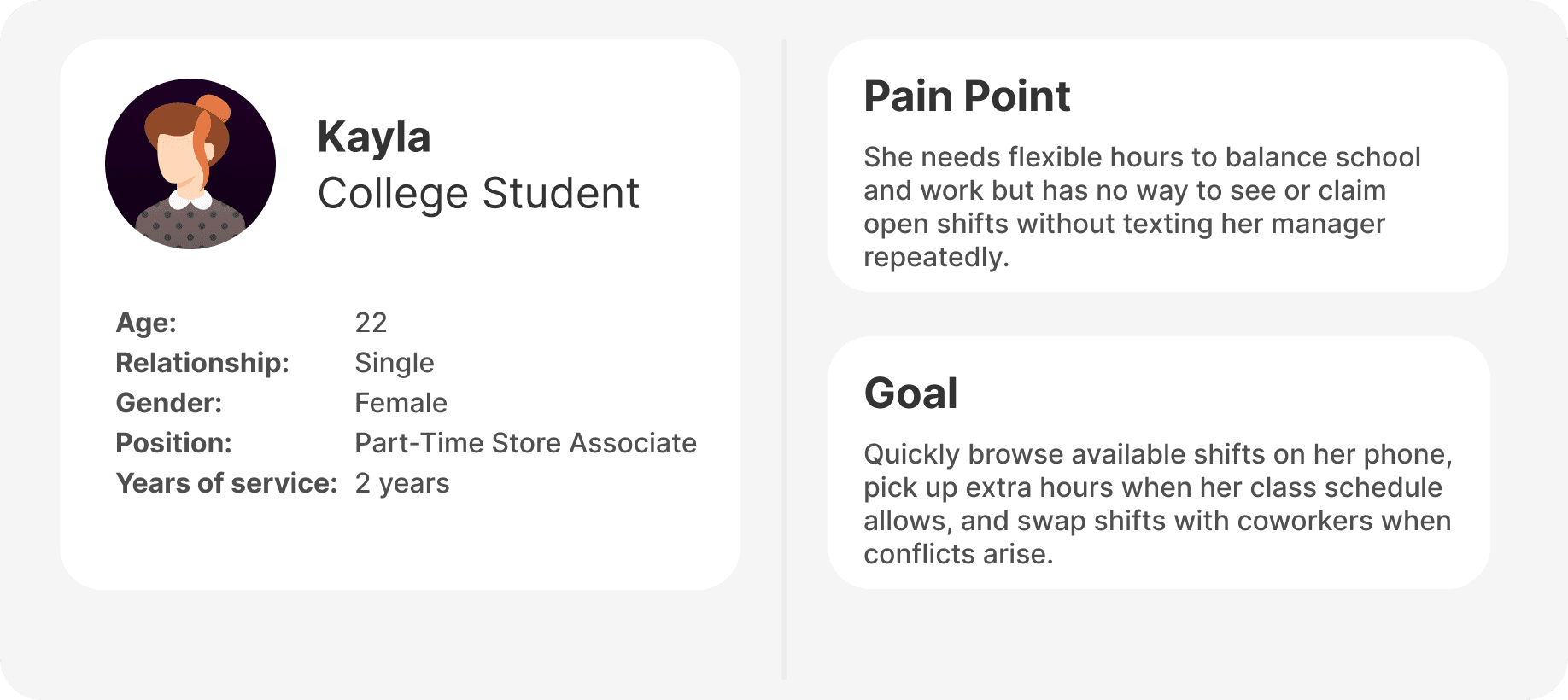
Associates had limited control over their schedules and relied on manual conversations, texts, or paper sign-up sheets to swap shifts, often resulting in confusion and last-minute coverage gaps.
Business Problem
Store managers spent hours each week managing schedule changes, while under- or over-staffing hurt store performance and associate satisfaction. Existing tools were rigid and difficult to use on the go.
Success Metrics
Increase percentage of shift changes handled via self-service.
Reduce manager time spent manually editing schedules.
Improve associate satisfaction with scheduling flexibility.

Research
Overview
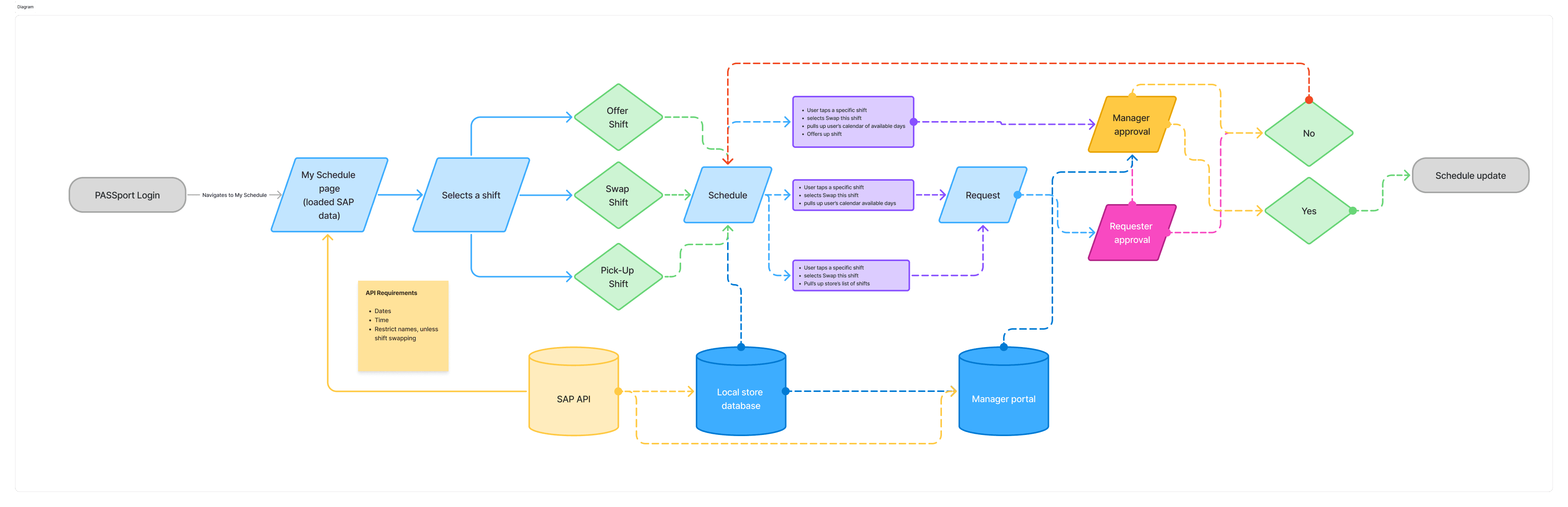
I worked with workforce management, operations, and frontline teams to understand how schedules were created and changed, and to document informal workarounds associates used to solve real-life needs (childcare, school, transportation).
Key Findings
Associates wanted more flexibility but did not trust existing tools to reflect “real” schedules.
Managers needed confidence that any change would still meet coverage rules and labor targets.
Both groups wanted transparency into which shifts were available and who was eligible to claim them.

Design
Wireframe
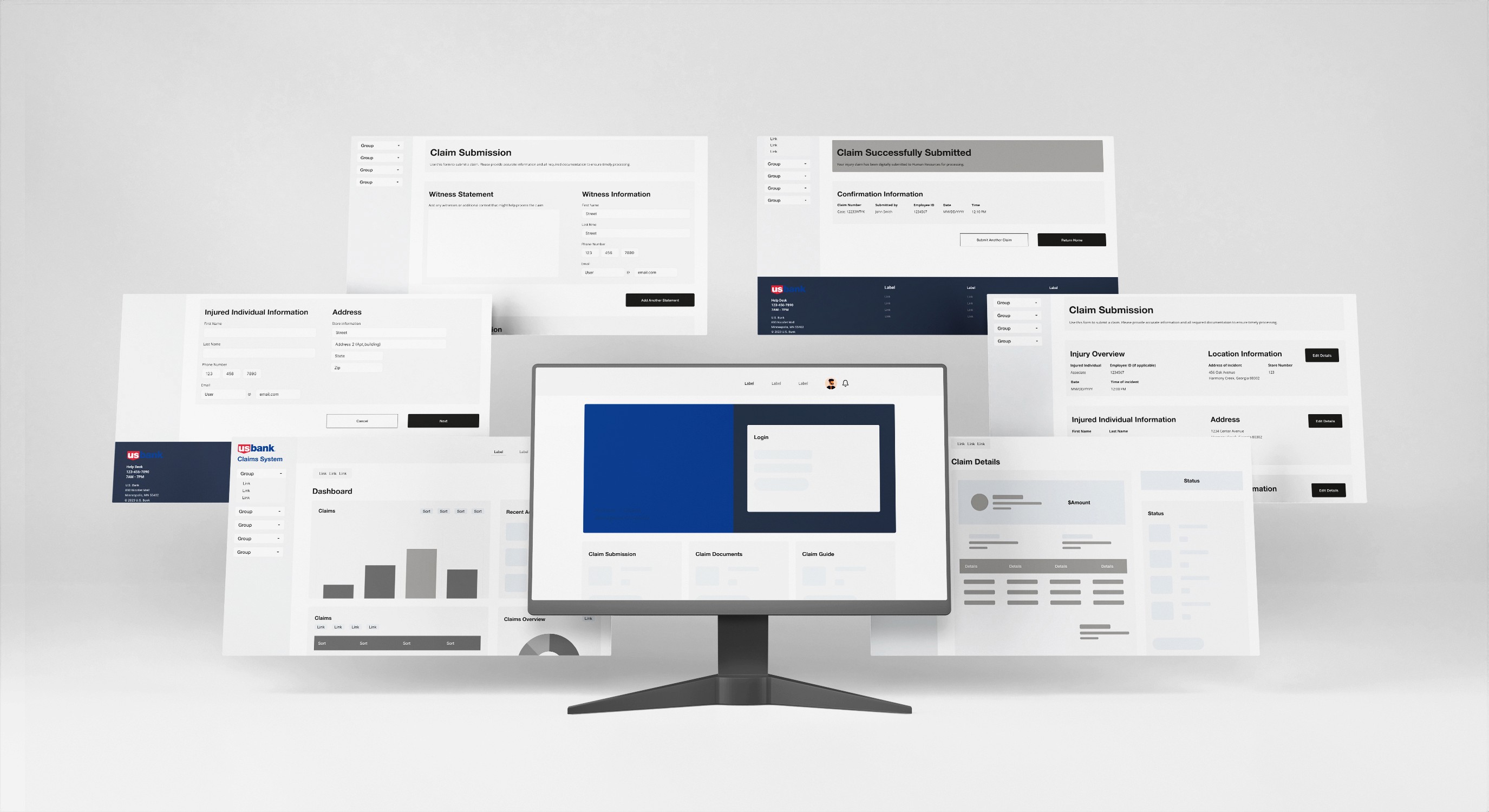
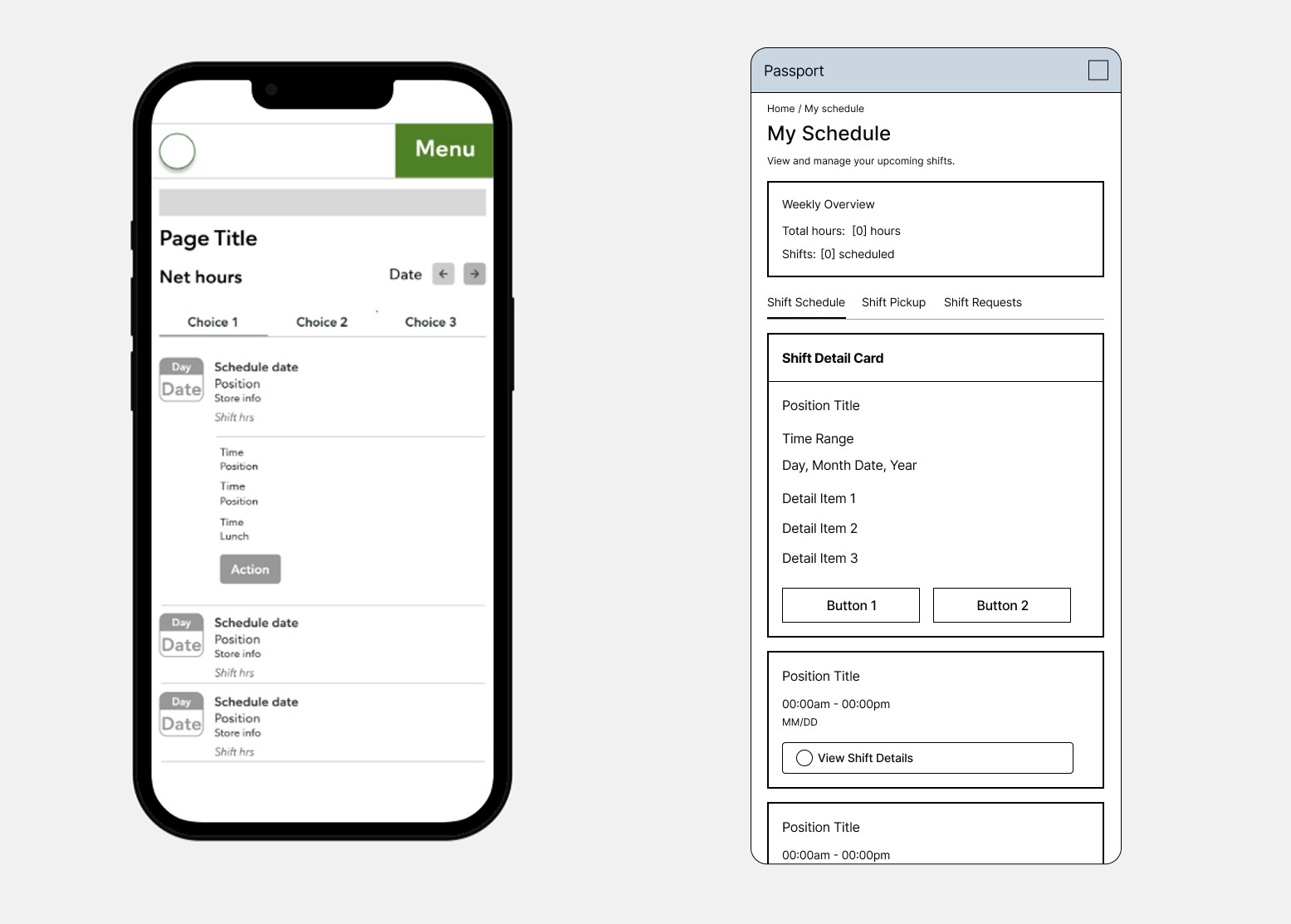
I created flows for browsing open shifts, requesting swaps, and approving changes, ensuring that eligibility and coverage rules were enforced in the background while the interface remained simple and friendly for non-technical users.

User Testing
We tested interactive prototypes with associates and managers across several store formats. Feedback led to clearer labels for shift types, better surfacing of pay differentials, and a streamlined approval experience that minimized manager taps.
Hi-Fidelity
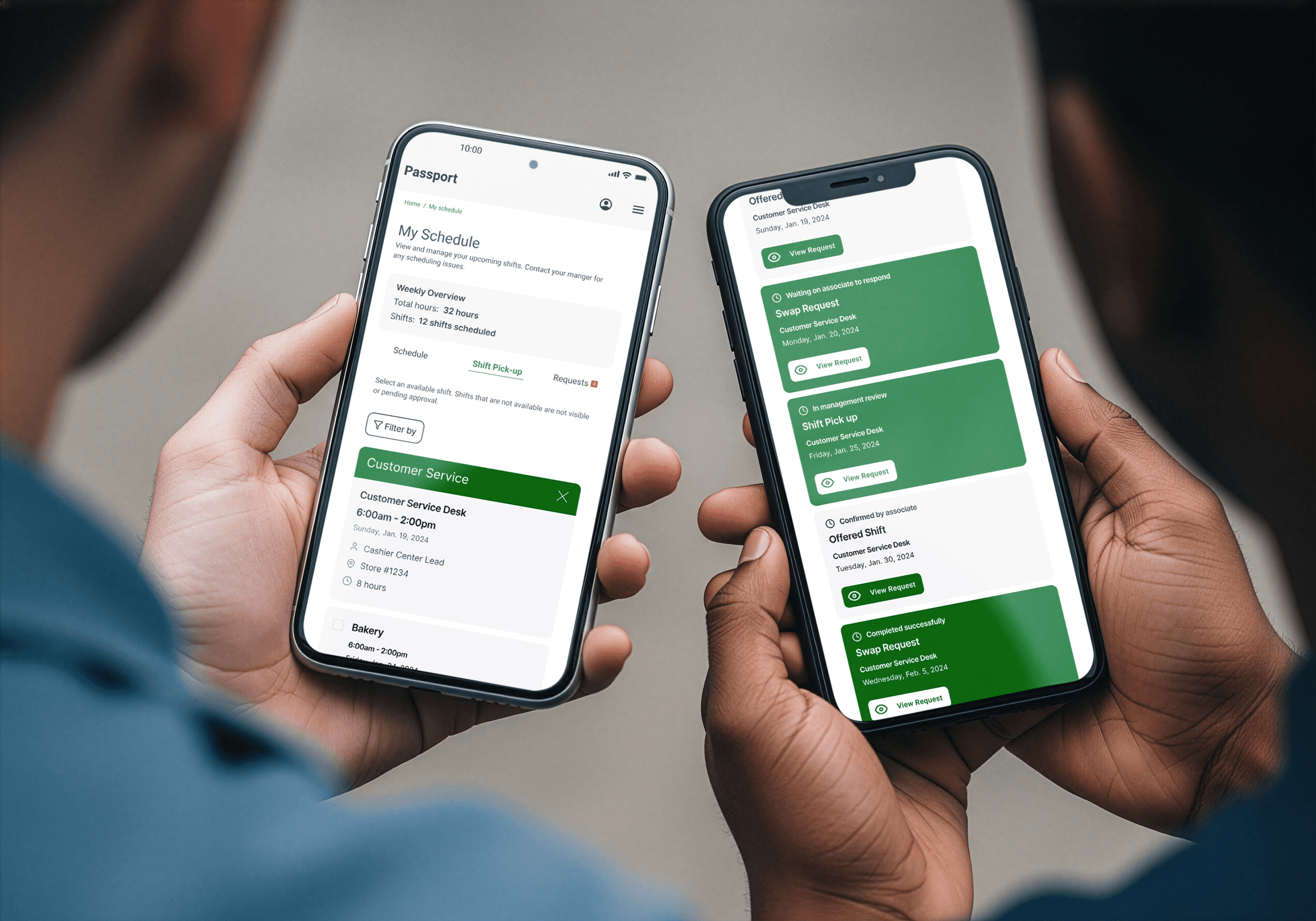
The final experience showcased a card-based marketplace of available shifts, personalized eligibility indicators, and real-time updates that synchronized with the core scheduling system. Visual patterns aligned with the broader design system to reduce training needs.
Cut Retail Scheduling Time With Shift
A mobile-first scheduling experience that lets associates control their schedule
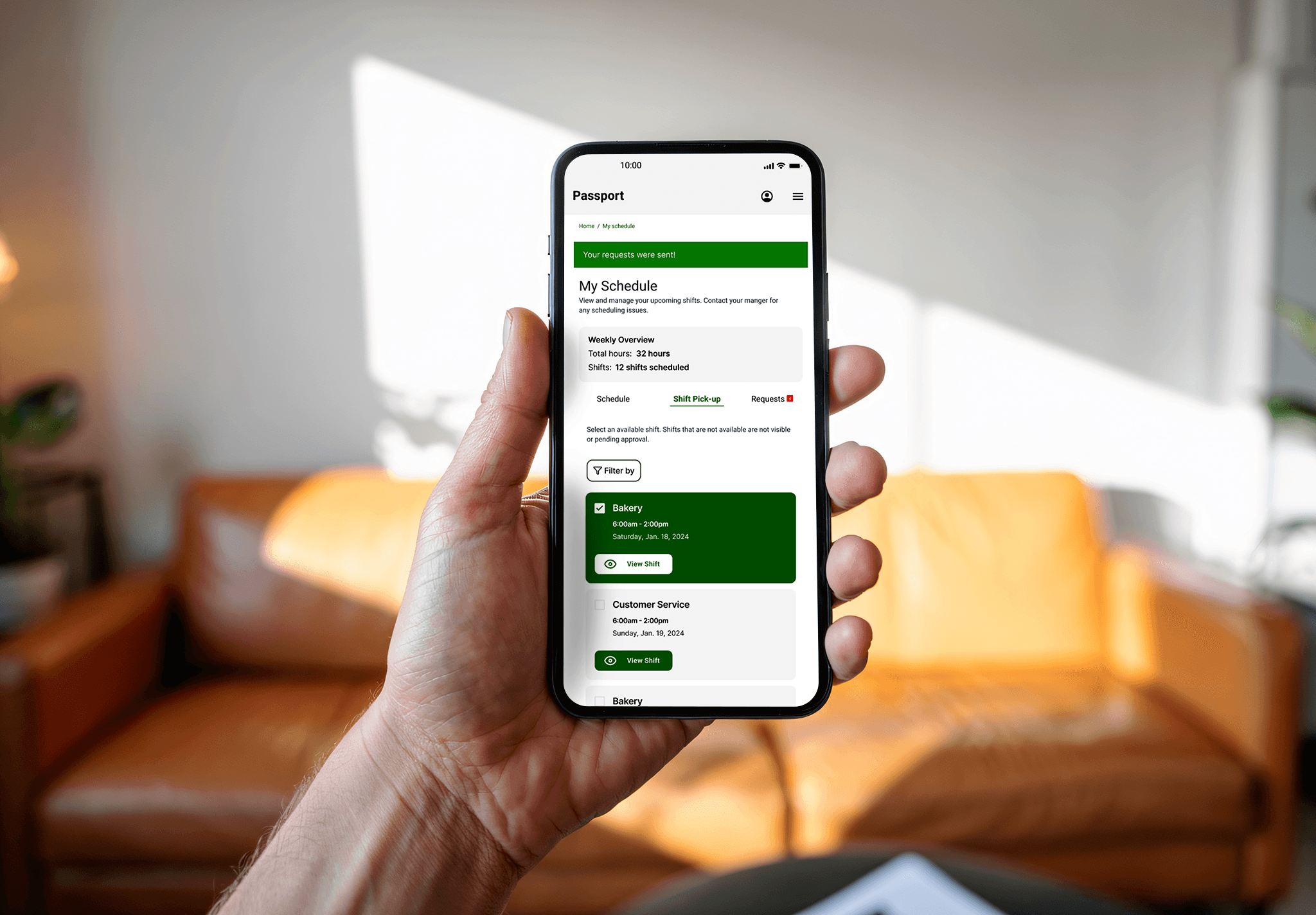
Users can maange their shifts on the go
100%
Shift Coverage Rate
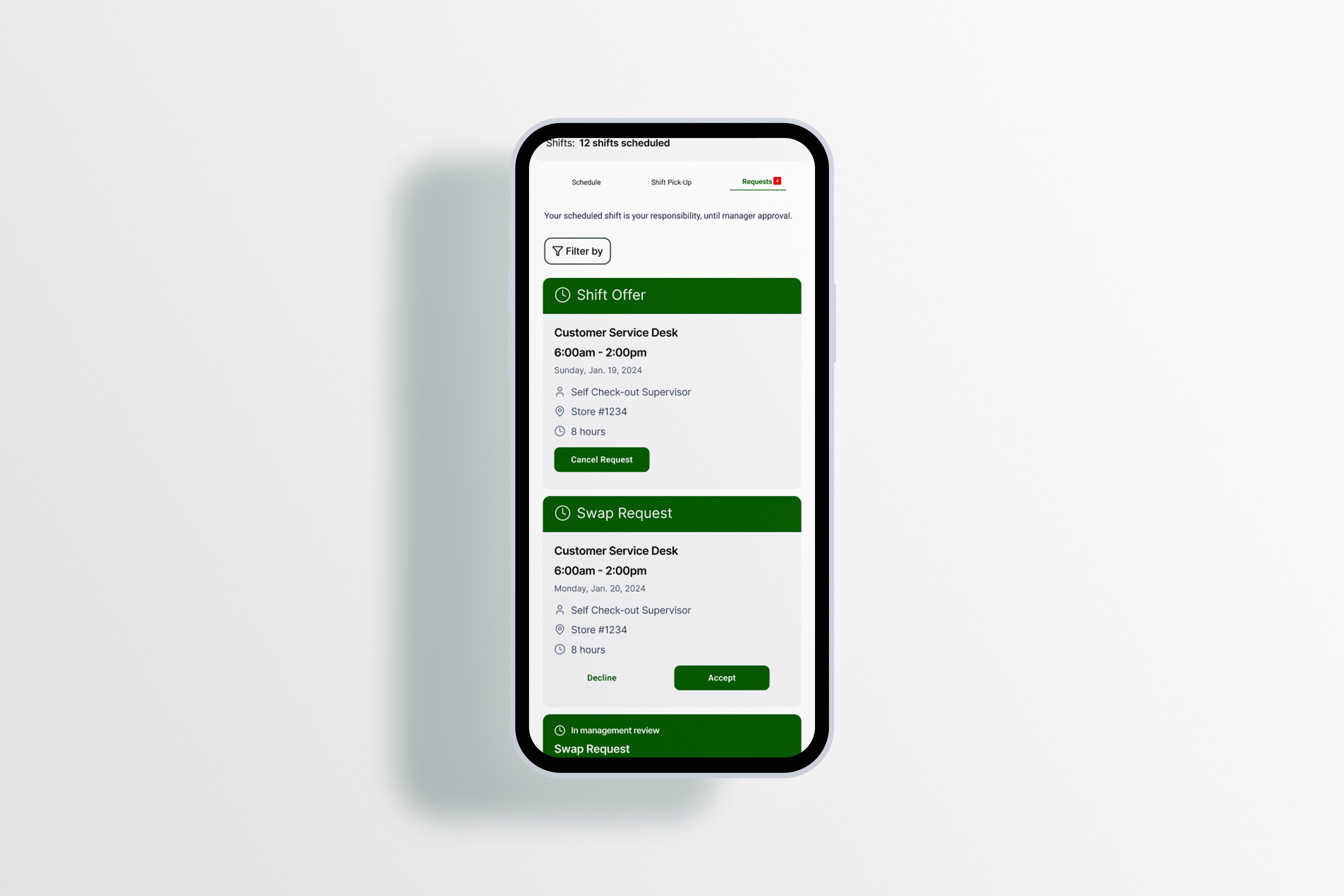
60% reduction in Manager scheduling time per week
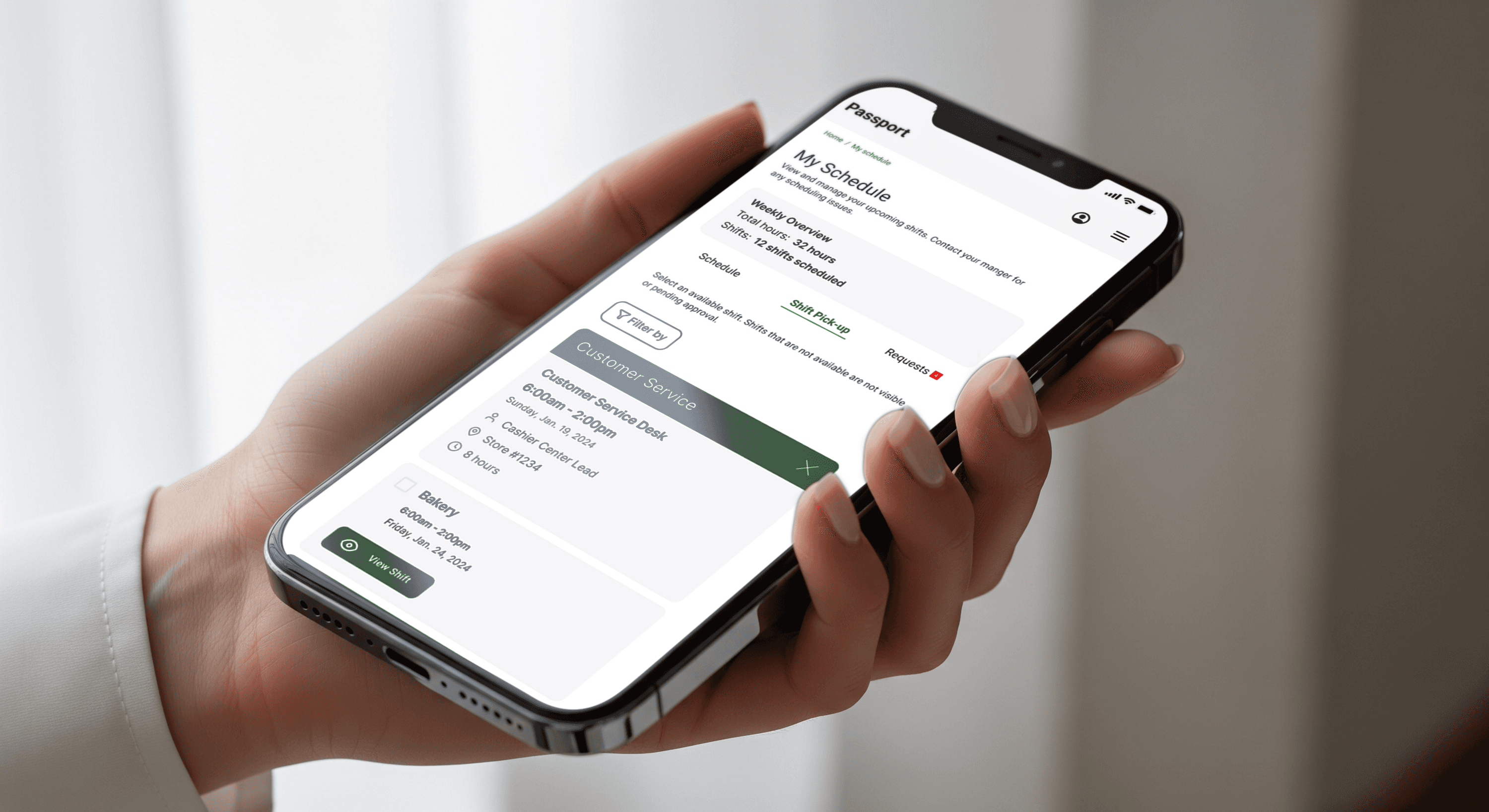
Users can quickly offer up shift, swap, and pick up aviabale shifts
Results
Through research, design, and testing, this project validated that associates already had workarounds for scheduling friction, group chats, sticky notes, and verbal agreements. The real opportunity was formalizing those behaviors into a transparent, compliant system. Observing managers juggling texts while running floor operations and hearing associates describe missed shift opportunities showed that both sides wanted the same thing, autonomy with accountability.
Key Results & Metrics
Self-service usage dramatically increased as associates adopted the marketplace to manage their own schedules.
Managers reported significant time savings on weekly scheduling tasks thanks to automated approvals and guardrails.
Early qualitative feedback highlighted improved sense of control and fairness around scheduling.
Metric | Before | After | Change / Impact |
|---|---|---|---|
Manager scheduling time per week | 5.2 hours | 2.1 hours | 60% reduction |
Self-service shift pickups per week | 5 (manual process) | 45 | 800% increase in associate engagement |
Peer-to-peer shift swaps per week | Informal/untracked | 30 approved swaps | New capability with compliance tracking |
Unfilled shifts (coverage gaps) per week | 8 | 0 | 100% improvement in coverage |
Associate feature adoption | N/A | 95% of eligible | Strong adoption signal |
Manager satisfaction with tool | N/A | 4.3/5 | Positive usability feedback |